
 Anchor · Control Plane
Cognitive control for the systems you actually run.
Not monitoring. Not alerting.
What Anchor does:
Holds a live, typed model of your infrastructure.
Catches drift at t+0 — not after the alert.
Resolves known patterns. Surfaces judgment calls.
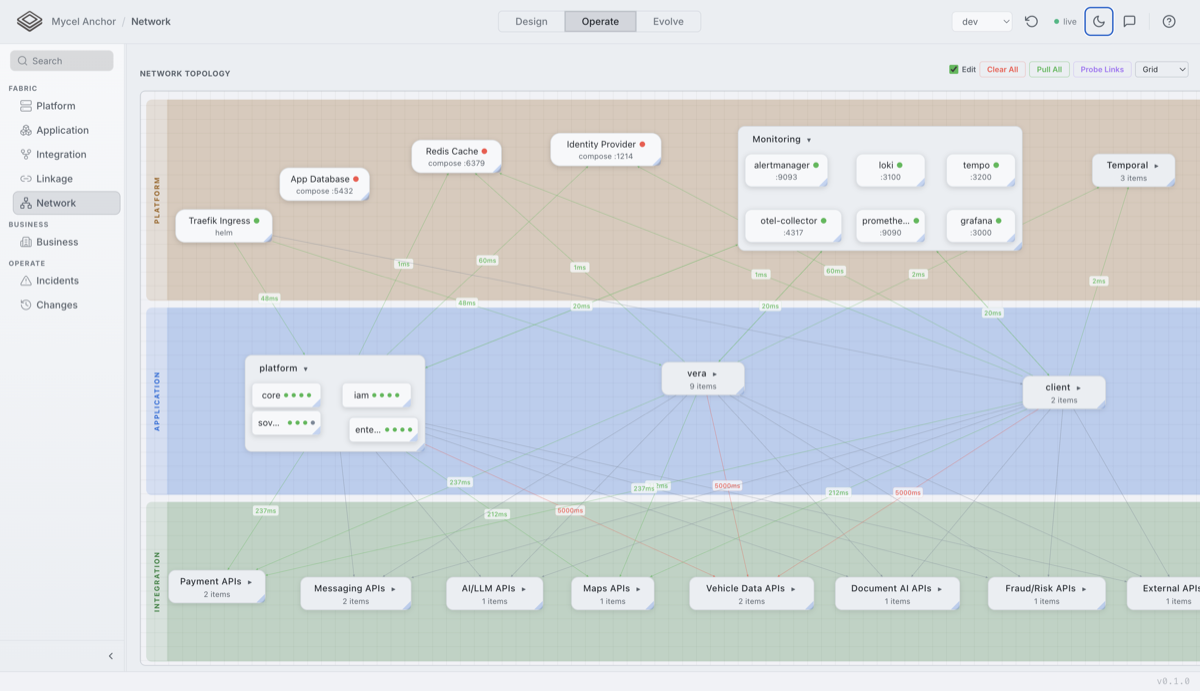
No one watches
Anchor does. Drift detected before the consequence forms — not after an alert fires.
Live, not documented
The model reflects what's actually running. Not what was documented last quarter.
Resolved, not escalated
Known patterns resolved automatically. Judgment calls surfaced for humans.
The problem
Systems grow. Teams don't.
More services. More edges. More configs. Human attention doesn't scale. The gap is where incidents form.
Anchor closes the gap.
The 3am page
Disappears — because the issue never forms.
Drift corrected. Patterns resolved. Consequential decisions surfaced with computed blast radius — and wait for human judgment.
Three surfaces
One live model. Three ways in.
designIntent, architecture, invariants. Before a line of code.operateLive topology, blast radius, resolution.evolveChange decisions with computed consequences.